





PPM-FAES: Sharing Knowledge to Better Manage Varicose Veins
កាលបរិច្ឆេទ: ១៧ កញ្ញា ២០២៦ / Author : ATH Sokren
In Phnom Penh, a scientific meeting bringing together nearly 70 healthcare professionals provided an opportunity to discuss the diagnosis, management and treatment of varicose veins of the lower limbs.
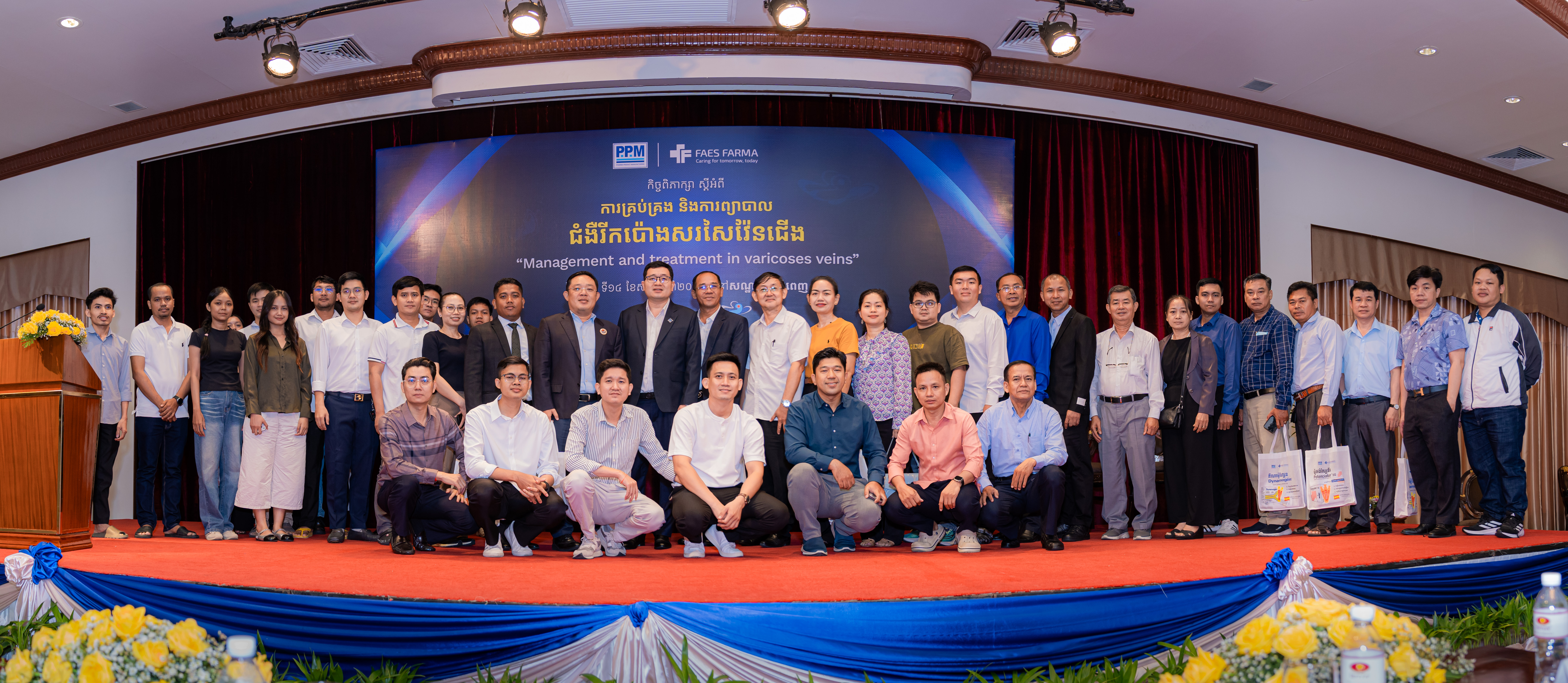
In mid-August, the commercial department of PPM-FAES organised a meeting in Phnom Penh devoted to the management and treatment of varicose veins of the lower limbs. Nearly 70 participants, attending in person or online, took part in this session aimed primarily at physicians and health specialists.
Titled Management and Treatment in Varicose Veins, the meeting aimed to foster the sharing of medical knowledge and professional experience around a common condition that is sometimes overlooked in its early stages, when symptoms remain subtle.
Mr Loung Sopheara, deputy director of PPM’s local commercial department, underlined the importance of such gatherings for health professionals. As one of Cambodia’s leading pharmaceutical companies, PPM works regularly with its partners to organise scientific programmes that bring together Cambodian physicians and international experts.
“I encourage the physicians attending in person, as well as those joining online, to take an active part in the discussions and to engage broadly with our speakers,” he said. The goal is for every participant to gain knowledge and experience that can be directly applied to improving patient care.
The keynote speaker, Dr Hong Kimheang, a cardiovascular surgery specialist at Preah Ket Mealea Hospital, presented his clinical experience with varicose veins of the lower limbs and the treatment options currently available in Cambodia.
He noted that many patients seek care only once the condition is already well established. Varicose veins can develop gradually and show few noticeable signs at first. A lack of information about diagnostic services and appropriate treatments can also delay consultation.
According to international data cited during the meeting, varicose veins of the lower limbs may affect around 33% of people aged 18 to 64. Dr Hong Kimheang stressed, however, that Cambodia does not yet have specific studies making it possible to accurately establish the prevalence of the condition in the country.
The specialist nevertheless expressed confidence in the progress made by Cambodian medicine. The country now has the skills and technology needed to ensure effective management of varicose veins, even if certain treatments — notably those using laser technology — remain costly for some patients.
The meeting also gave the floor to Ms Kan Vanna, pharmacist and representative of the Spanish laboratory FAES. She presented Venosmil, a medicine used in the management of chronic venous conditions, and outlined FAES’s international footprint, with a presence in more than 130 countries and nearly a century of activity in the pharmaceutical industry.
In Cambodia, cooperation between FAES and PPM is built for the long term. Through this partnership and the organisation of scientific meetings, PPM-FAES aims to help strengthen the skills of healthcare professionals and, over time, to support a continuous improvement in the quality of care provided to Cambodian patients.
